


Schagen


.

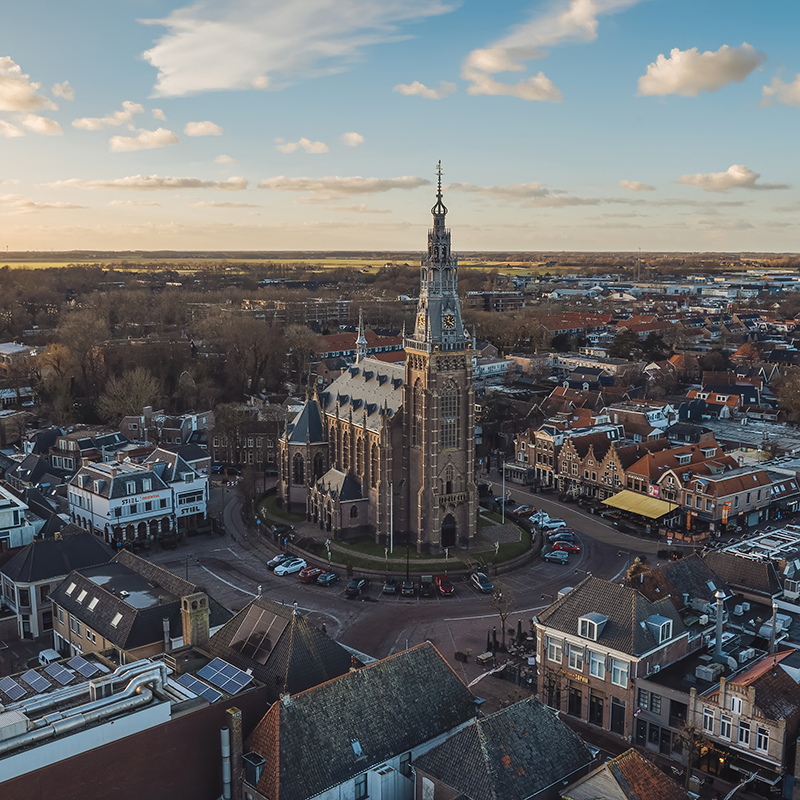
The Steering Committee for Sustainable Heat in Schagen identified the northern part of Schagen as a promising area for a district heating network in a previous study. For this neighbourhood, the aim is to investigate which type of heat network (medium-temperature or very low-temperature) or alternatively individual air-to-water heat pumps is the most optimal. This will be assessed from the perspective of a potential heat utility company and also on the perspective of an average end user in Schagen. There are several ponds and a canal in this area, which is why aquathermal energy is being considered as the main potential heat source.
.
The Steering Committee for Sustainable Heat in Schagen identified the northern part of Schagen as a promising area for a district heating network in a previous study. For this neighbourhood, the aim is to investigate which type of heat network (medium-temperature or very low-temperature) or alternatively individual air-to-water heat pumps is the most optimal. This will be assessed from the perspective of a potential heat utility company and also on the perspective of an average end user in Schagen. There are several ponds and a canal in this area, which is why aquathermal energy is being considered as the main potential heat source.
Source potential
3 339 kW
Amount of buildings
883
Amount of sources
3 waterbodies

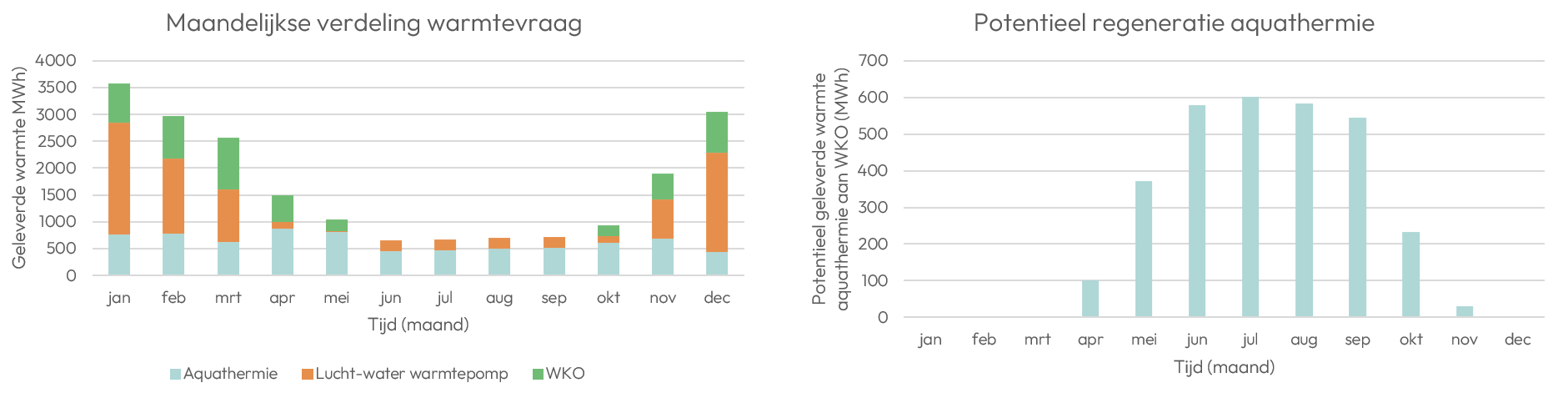
This study does not only consider aquathermal energy as a heat source, but also includes an aquifer thermal energy storage system (ATES) and central air-to-water heat pumps as potential sources. The financial optimisation resulted in the source mix shown below. Aquathermal energy will provide a constant base heat load throughout the year. The ATES system and the air-to-water heat pumps will cover the peak demand during winter. In addition, aquathermal energy will regenerate the ATES system during summer, ensuring that the ATES remains balanced on an annual basis.
The financial analysis shows that a medium-temperature (MT) district heating network has lower investment and operational costs than a very low-temperature (VLT) network. For this neighbourhood, it is therefore not possible to develop a financially viable configuration with a low temperature network for either the heat utility or the end user. This is feasible for an MT network. A heat utility could achieve an internal rate of return (IRR) of around 7.5% over a 30-year period. For the end user, the total cost over 30 years is approximately equal to that of an individual air-to-water heat pump. Unlike an air-to-water heat pump, a district heating network has no visual or noise impact on a dwelling. An MT district heating network based on aquathermal energy is therefore not only an attractive financial solution for decarbonisation, but also offers additional practical advantages compared to individual air-to-water heat pumps.


This study does not only consider aquathermal energy as a heat source, but also includes an aquifer thermal energy storage system (ATES) and central air-to-water heat pumps as potential sources. The financial optimisation resulted in the source mix shown below. Aquathermal energy will provide a constant base heat load throughout the year. The ATES system and the air-to-water heat pumps will cover the peak demand during winter. In addition, aquathermal energy will regenerate the ATES system during summer, ensuring that the ATES remains balanced on an annual basis.
The financial analysis shows that a medium-temperature (MT) district heating network has lower investment and operational costs than a very low-temperature (VLT) network. For this neighbourhood, it is therefore not possible to develop a financially viable configuration with a low temperature network for either the heat utility or the end user. This is feasible for an MT network. A heat utility could achieve an internal rate of return (IRR) of around 7.5% over a 30-year period. For the end user, the total cost over 30 years is approximately equal to that of an individual air-to-water heat pump. Unlike an air-to-water heat pump, a district heating network has no visual or noise impact on a dwelling. An MT district heating network based on aquathermal energy is therefore not only an attractive financial solution for decarbonisation, but also offers additional practical advantages compared to individual air-to-water heat pumps.
Schagen
:
.
.


Interested in an aquathermal installation? Read more on our approach on why an aquathermal system migh be interesting for your water body!


